
Yukon Previous Residents by Era
One Yukon address can be traced through several records, but no source covers every year or every kind of past resident. Start with the current Yukon parcel, account, and legal description. Then select the source that fits the period and the question. A Yukon deed records a title event; a Yukon directory may give an address-associated listing; a Yukon permit dates physical work; a Yukon census is a household snapshot; and a Yukon map supplies lot or building context. Keep those labels distinct. They prevent a useful house history from turning into an unsupported claim about who lived there. The same care is essential when previous residents are the question.
| Source | Years it covers | Where held | What it shows |
|---|---|---|---|
| Yukon / Canadian County land records | 1890–86 book/page; 1987–88 name only; 1989+ name plus legal description | Canadian County Clerk portal and counter | Recorded instruments, legal description, dated parties, and title chain leads. |
| Yukon Assessor and Treasurer systems | Current live property and tax systems | Canadian County online portals | Current parcel/account and selected tax-year labels, not historical occupancy. |
| Yukon permit portals | Past permits closed before March 28, 2021; separate active portal | Yukon Development Services | Work, applicant, status, and date trail for a property. |
| Yukon criss-cross directory | 1968 confirmed | OHS Reading Room | Address-to-subscriber or occupant lead for one year. |
| Yukon telephone books | 1955–67, 1969–72, 1986, 1991, 1994–96, 1998–2000, 2008–09 | OHS onsite | Dated subscriber cross-checks with gaps between runs. |
| Yukon newspapers | 1890s–1960s collection; 1923–61 digitized Yukon Oklahoma Sun issues | OHS Gateway | Notices, advertisements, social, obituary, and probate clues. |
| Yukon Sanborn and rating maps | 1894–1943 maps; 1900–03 and 1905–10 ratings | OHS map collections | Lot, street, and built-form context, not a name list. |
| Yukon federal-census checkpoint | 1950 currently released | National Archives and genealogy access | Household snapshot for the census date. |
For a newer Yukon address, begin with the parcel and recorded transfer. For an older Yukon core address, add Sanborn or insurance-map context before deciding that an old street wording matches the current street.
Yukon Previous Address Records
The Yukon street address is the starting label, but the legal description is the durable bridge between Yukon property layers. The Canadian County Assessor can provide a Yukon account or parcel identifier, situs address, owner or taxpayer label, legal description, subdivision, block and lot, or section-township-range information. A Yukon situs address identifies the property location; a Yukon mailing address identifies where county mail is sent; a legal description identifies the land in the recorded system. Those fields can differ, so copy each one as labeled rather than merging them into one address.
Address → parcel/account → legal description → subdivision or STR → recorded instrument. That sequence lets a Yukon address trail reach the County Clerk index without treating a current party name as an address search.
Note: A property card can identify an assessment-side owner or taxpayer, but it does not identify every past household member.
Yukon Deed Records by Era
Canadian County’s indexing phases create a practical break in a Yukon house history. Land records from 1890 through 1986 are indexed by book and page. The 1987–88 phase is name only. From 1989 forward, the index uses name plus legal description. Most document images begin in 1890, but access to images requires login, and the Canadian County Clerk maintains public indexes. The County Clerk has not published a verified online start year for the public search, so the portal’s default date should never be treated as the start of county records.
For Yukon land records during the name-only years, carry the lot, block, subdivision, or STR details into every result check. Earlier book-and-page references may need conversion at the Canadian County counter for a Yukon record. Later entries can be tested through both party and legal-description paths. This Yukon-specific indexing change is a stronger clue than a broad name search when several people share a surname, especially in a past residents search.
Tracing Yukon Deed History Backward
A Yukon chain of title is the recorded succession of transfers affecting one legal parcel. Start with the newest deed connected to the current owner or taxpayer label, record the instrument details, then follow the prior party in the appropriate Direct or Reverse direction. The Canadian County Clerk public index serving Yukon has name, subdivision, STR, and document-information modes. Its name instructions call for an asterisk after the last and first names, and the document-information route recommends narrow date ranges for broad document-type searches. An instrument hit proves that a party appears in a recorded matter. It does not by itself establish where that person lived.
The Canadian County land-record guidance explains the county’s historical index phases and the counter fallback for original documents.
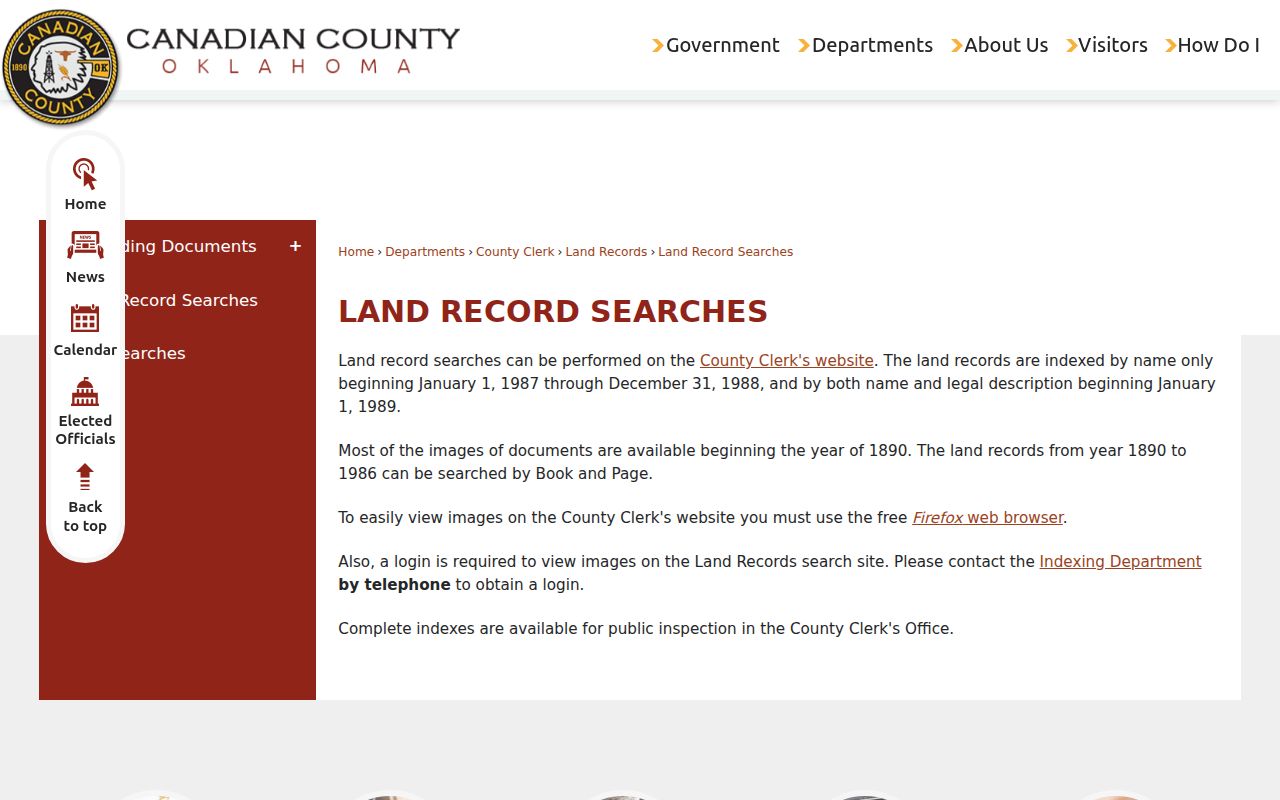
The County Clerk’s historic index guidance helps a researcher choose a book/page, name, or legal-description route before trying to move to the preceding transfer.
- Look up the Yukon address in the Canadian County Assessor property search and save the parcel or account identifier and legal description.
- Find the newest Yukon conveyance in the Clerk index, then record document number, filing date, instrument date, type, parties, book/page, and legal description.
- Identify the transferor and search for that party’s earlier acquisition while retaining the same legal description, lot, block, subdivision, or STR.
- Repeat backward, separating deeds from mortgages, releases, liens, plats, affidavits, and other instruments.
- Use the County Clerk counter for an original document, image question, book/page conversion, or mismatch that the index cannot resolve.
- Grantor
- The party transferring an interest in a recorded instrument.
- Grantee
- The party receiving an interest in a recorded instrument.
- Chain of title
- The succession of recorded transfers for the same legal parcel.
- Legal description
- The lot, block, subdivision, or survey description that ties an address to recorded land.
Yukon Past Address Permit Records
Permit dates add a physical timeline to an address trail. Yukon Development Services maintains an active permit portal and a separate past-permit portal for permits closed before March 28, 2021. The observed grid can show permit issued and expiration dates, applicant name, trade type, business name, status, and a view route. A Yukon permit can date work or an application. It is not title evidence, and it should not be used as a substitute for the deed chain. When an online search is incomplete, Development Services or a narrowly identified records request is the documented fallback.
Yukon’s past permit search marks the pre-March-28-2021 side of the City’s address-history split.
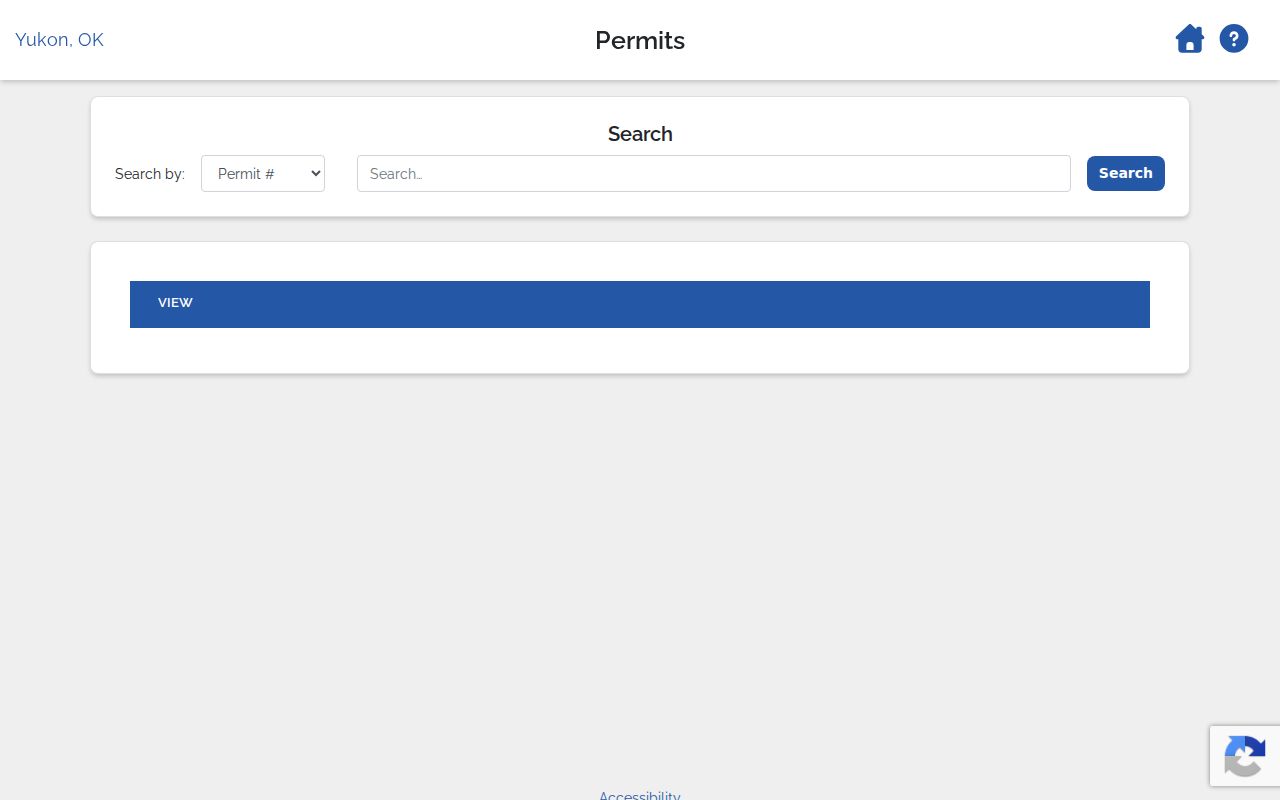
Compare the Yukon permit date and property description with the recorded transfer and map evidence before linking the work to a Yukon address history.
Yukon Maps for Past Addresses
Sanborn maps make Yukon’s early built environment easier to place before directory years become available. Confirmed editions span 1894, 1895, 1898, 1901, 1904, 1909, 1913, 1920, 1929, and 1943. OHS also holds Yukon fire-insurance rating booklets for 1900–03 and 1905–10. Yukon maps can show streets, blocks, lots, building stories, construction, and revisions. They do not name an occupant just because a building appears. Use the map date to test a street or lot, then pair it with a recorded instrument, dated directory line, census, or newspaper clue. That is useful when asking who lived here before, but the map itself is not a people record.
OHS provides a digitized 1901 Yukon insurance map as one documented map-era reference.
Historic Yukon Route 66, Main Street, rail access, and the early milling core make map context especially useful when matching an older Yukon address to a current parcel.
Yukon Previous Residents in Dated Sources
Yukon past owners are only one layer of an address history. The 1968 El Reno/Yukon/Edmond criss-cross directory is the confirmed address-ordered local lead for one year, and OHS telephone-book runs provide further dated subscriber checks. Released 1950 federal census material supplies a household snapshot at its own census date. OHS Gateway’s Yukon newspaper collection can add notices, advertisements, social mentions, obituary leads, and probate clues across the 1890s to 1960s. The historical collections themselves are described in the Yukon city directory collections, where their onsite limits and year runs are kept together.
- Choose the closest confirmed Yukon directory or phone-book year to the address question.
- Use the Yukon criss-cross volume only as a 1968 address lead, not as continuous coverage.
- Match a Yukon street form and date to the released census snapshot.
- Check Yukon Sun OCR against the page image, retaining issue date and page with the finding.
- Compare all dates with the Yukon deed and permit trail before describing a change in a household.
Lawful use. Use Yukon previous-resident research for family history, estate questions, or house history. Do not use an address trail to stalk, harass, or harm anyone.
Yukon Criss-Cross Address Records
The 1968 criss-cross source is a valuable local quirk because it runs from address toward an occupant or subscriber lead. Its limitations are equally important. OHS’s catalog entry is not a public digitized name list, and its El Reno/Yukon/Edmond label means the volume should not be portrayed as an uninterrupted Yukon-only directory. Request the Reading Room copy, transcribe the printed street form and the edition year, then compare that lead with the parcel, map, and other dated records. Do not turn an older address listing into a claim about a present household.
Note: If the printed address does not fit a present map, check directional and street-suffix differences before deciding it changed.
Yukon Address Trail Endpoints
Probate, obituary, cemetery, and court materials can close a Yukon address trail only when names and dates already align. The Canadian County Genealogical Society Archives Room reports an obituary index for 1890–1916, a cemetery-name index through 1969, funeral records, probate resources, newspapers, census, and other county material. The City’s cemetery page provides lot and block maps, not an online interment-name index. For a probate case or copy, the Canadian County Court Clerk’s record-search guidance explains the OSCN route, the usual pre-1994 online gap, and mail or counter alternatives. These sources can add an end-of-life or heir lead, not a blanket answer about every former address. They can also help test a previous residents lead from an earlier Yukon record.
Use the Canadian County Genealogical Society Archives Room and the Yukon Cemetery plat maps as separate, complementary channels.